
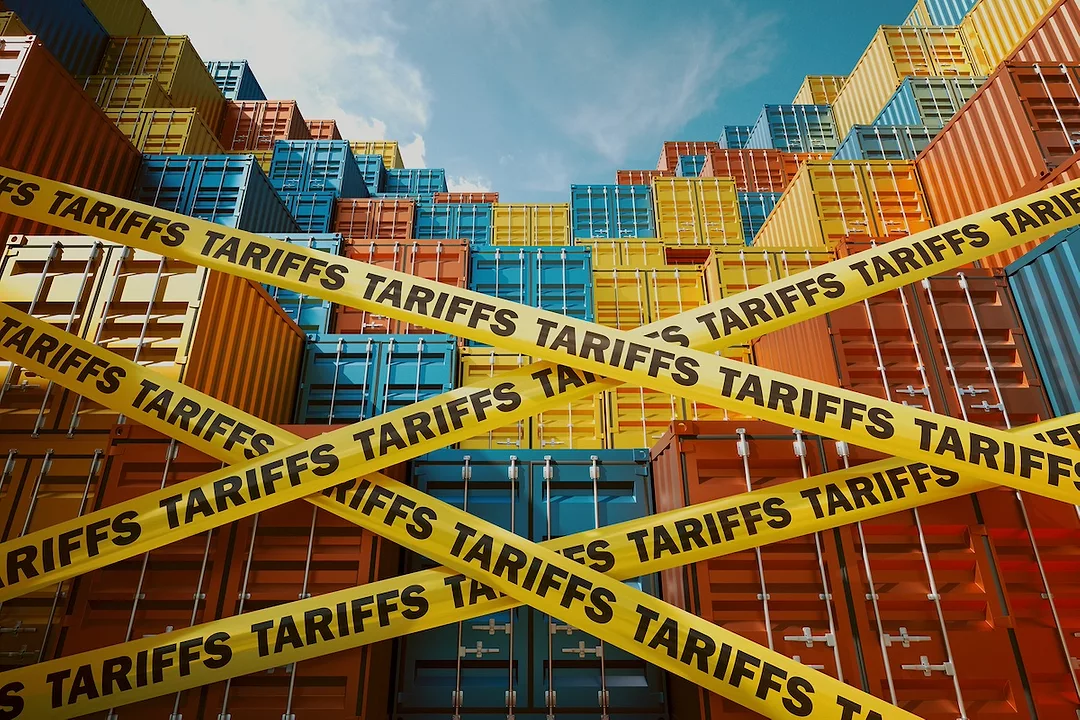

In a historic ruling with major economic and political consequences, the U.S. Supreme Court has struck down a sweeping set of emergency tariffs imposed by President Donald Trump, declaring them illegal in a 6–3 decision.
The ruling delivers a significant blow to Trump’s economic agenda and sets a new constitutional boundary on presidential power over trade policy without congressional approval.
Court Says President Overstepped Authority
The case centered on the administration’s use of the International Emergency Economic Powers Act (IEEPA) to impose tariffs on foreign goods. The Supreme Court concluded that the law does not grant presidents unlimited authority to impose tariffs unilaterally.
In the majority opinion, the Court warned that the administration’s interpretation would dramatically expand presidential power:
“[T]he Government reads IEEPA to give the President power to unilaterally impose unbounded tariffs and change them at will. That view would represent a transformative expansion of the President’s authority over tariff policy.”
The decision reinforces Congress’s constitutional role in setting trade policy and limits the executive branch’s ability to bypass lawmakers during economic emergencies.
Potential Billions in Refunds for Businesses
One of the biggest unanswered questions is what happens next to the billions of dollars collected from importers under the now-invalid tariffs.
Justice Brett Kavanaugh, writing in dissent, noted the uncertainty:
“The Court says nothing today about whether, and if so how, the government should go about returning the billions of dollars that it has collected from importers.”
If refunds are required, the process could be complex and chaotic, affecting companies across manufacturing, retail and logistics sectors that paid the tariffs.
Markets React Modestly
Financial markets responded positively but cautiously following the ruling.
- The S&P 500 rose about 0.3% in mid-morning trading
- Gold futures increased 1.7%
- Silver climbed more than 5% after an earlier rally
Investors appear to be weighing both the relief from potential trade barriers and the uncertainty about what policies may replace them.
Background: How the Tariffs Were Imposed
Trump had imposed more than half of the tariffs under emergency powers, arguing they were necessary to protect national security and economic stability. The move was controversial because tariffs are traditionally set by Congress.
During earlier hearings, even some conservative justices questioned whether the president could bypass lawmakers to enact such sweeping measures.
What Happens Next?
Despite the ruling, the tariffs may not disappear entirely.
The administration has previously indicated it could rely on alternative trade authorities to re-impose similar tariffs through different legal channels. Additionally, the decision could complicate existing trade agreements negotiated while the tariffs were in effect.
Foreign governments are also expected to closely monitor the situation, as the tariffs influenced several international trade negotiations.
Why This Decision Matters
The ruling marks one of the most significant judicial checks on presidential economic power in recent decades. It clarifies limits on emergency authority and could reshape how future presidents approach trade disputes.
Beyond politics, the decision could ripple through global markets, supply chains and diplomatic relations for years to come.

READ MORE : News Celebrity Real People Sports Movies Music TV
Awards & Events Podcasts Food Health Home Travel Style
Astrology Pets & Animals Reviews

You Might Like
-
BTS’ ‘ARIRANG’ Breaks Spotify Records Just One Day After Release
BTS didn’t just come back — they completely took over streaming platforms within hours of their return. Their new album…
-
BTS Is Back — And Their Seoul Concert Proves Nothing Has Changed
After nearly four years away as a group, BTS is finally back — and it honestly feels like they never…
-
‘Spider-Man: Brand New Day’ Trailer Breaks Records — MCU’s Comeback Moment?
The trailer for Spider-Man: Brand New Day has exploded across the internet, delivering what many are calling a franchise-saving moment…
-
Action Legend Chuck Norris Dies at 86: ‘Walker, Texas Ranger’ Star Remembered
Action icon and martial arts legend Chuck Norris has died at the age of 86, his family confirmed in a…
-
Peter Mandelson Arrested: Ex-U.K. Ambassador Held in Epstein Probe
Former U.K. ambassador to the United States Peter Mandelson has been arrested on suspicion of misconduct in public office as…
-
Jack Hughes’ OT Winner, Connor Hellebuyck’s Heroics Lift USA to Olympic Hockey Gold
MILAN — The United States has captured Olympic gold in men’s hockey for the first time since the legendary 1980…
-
Former Purdue, NFL Wide Receiver Rondale Moore Dies at Age 25
Former Purdue standout and NFL wide receiver Rondale Moore has died at the age of 25, the Minnesota Vikings confirmed…
-
Toy Story 5: Everything to Know About Buzz and Woody’s Return to the Big Screen
Woody, Buzz Lightyear and the beloved toy gang are gearing up for an emotional and timely comeback in Toy Story…
-
Nathan MacKinnon’s Last-Minute Goal Sends Canada to Olympic Hockey Gold Medal Game
Canada is heading back to the Olympic men’s hockey gold-medal game — and it took another dramatic finish to get…
-
Taylor Swift’s ‘The Life of a Showgirl’ Becomes IFPI’s Best-Selling Global Album of 2025
Taylor Swift has once again dominated the global music industry. Her album “The Life of a Showgirl” has officially been…
-
Supreme Court Blocks Trump’s Emergency Tariffs in Historic 6–3 Ruling
In a historic ruling with major economic and political consequences, the U.S. Supreme Court has struck down a sweeping set…
-
Hilary Duff Opens Up About Old Romance Rumors, Family Struggles and Her Long-Awaited Music Comeback
Millennial pop icon Hilary Duff has officially returned to music after more than a decade — and she’s not holding…